National Will Awareness Workshop Campaign
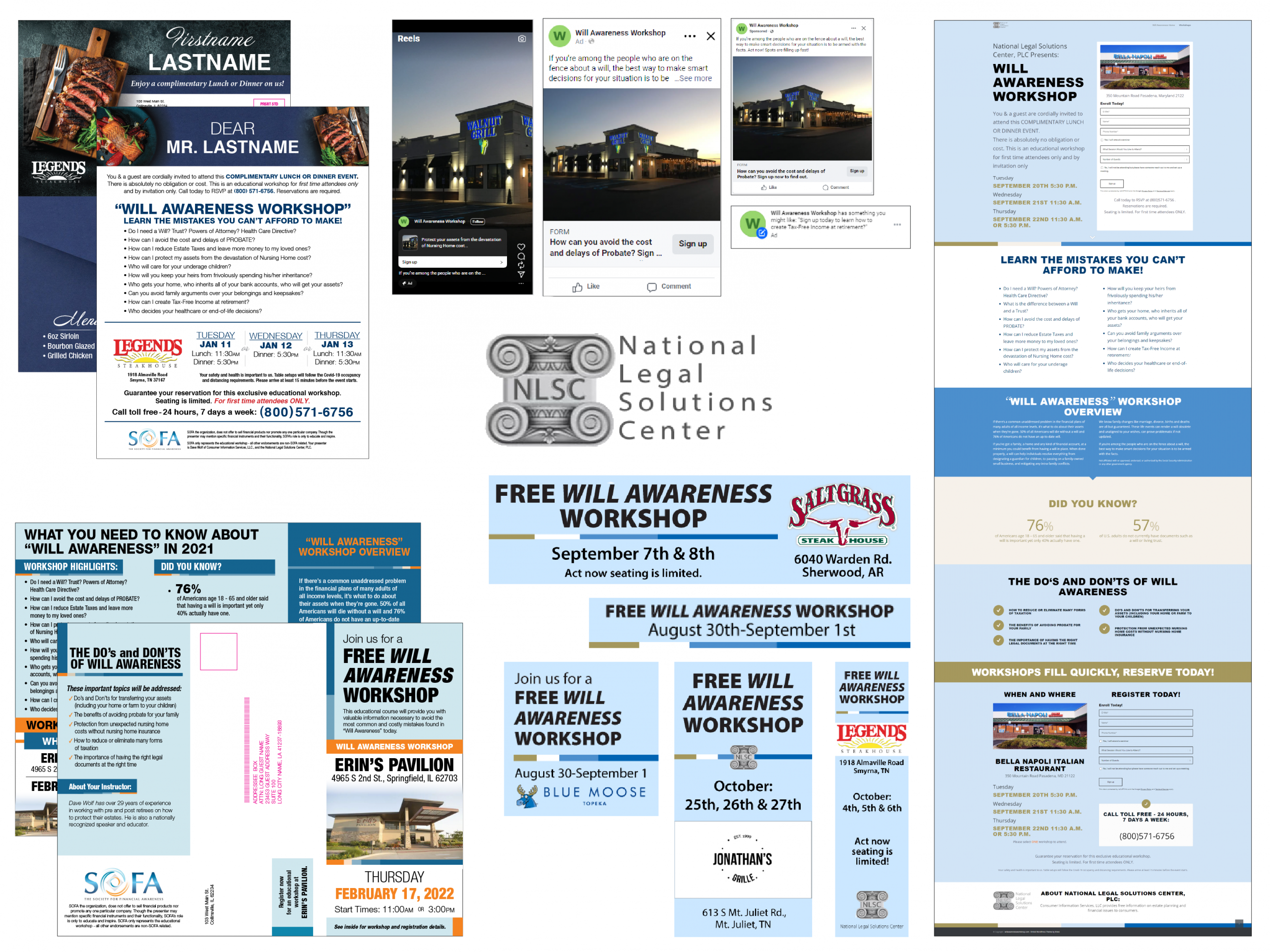
I developed and executed a national campaign for the National legal Solutions Center's Will Awareness program. It was designed to increase attendance at estate planning workshops held in cities across the country. The strategy combined direct mail, display advertising, and social media ads, all funneling into bespoke landing pages created specifically for each workshop location.
The campaign targeted individuals in rural communities surrounding small to mid-sized cities, ensuring outreach to audiences most likely to attend in-person events. Messaging across all channels was consistent and localized, reinforcing the workshop details and driving urgency around registration.
Each workshop had its own dedicated landing page to capture registrations and provide event-specific information. Success was tracked through website sign-ups as well as Facebook lead forms, allowing us to measure engagement across both on-site and in-platform conversions.
All captured leads were then transferred to the client’s third-party appointment setting team, who followed up directly to confirm attendance and schedule appointments. This fully integrated, multi-channel approach successfully drove qualified registrations and streamlined the handoff from marketing to confirmed workshop attendance.
Display Advertising Strategy for Will Awareness Campaign
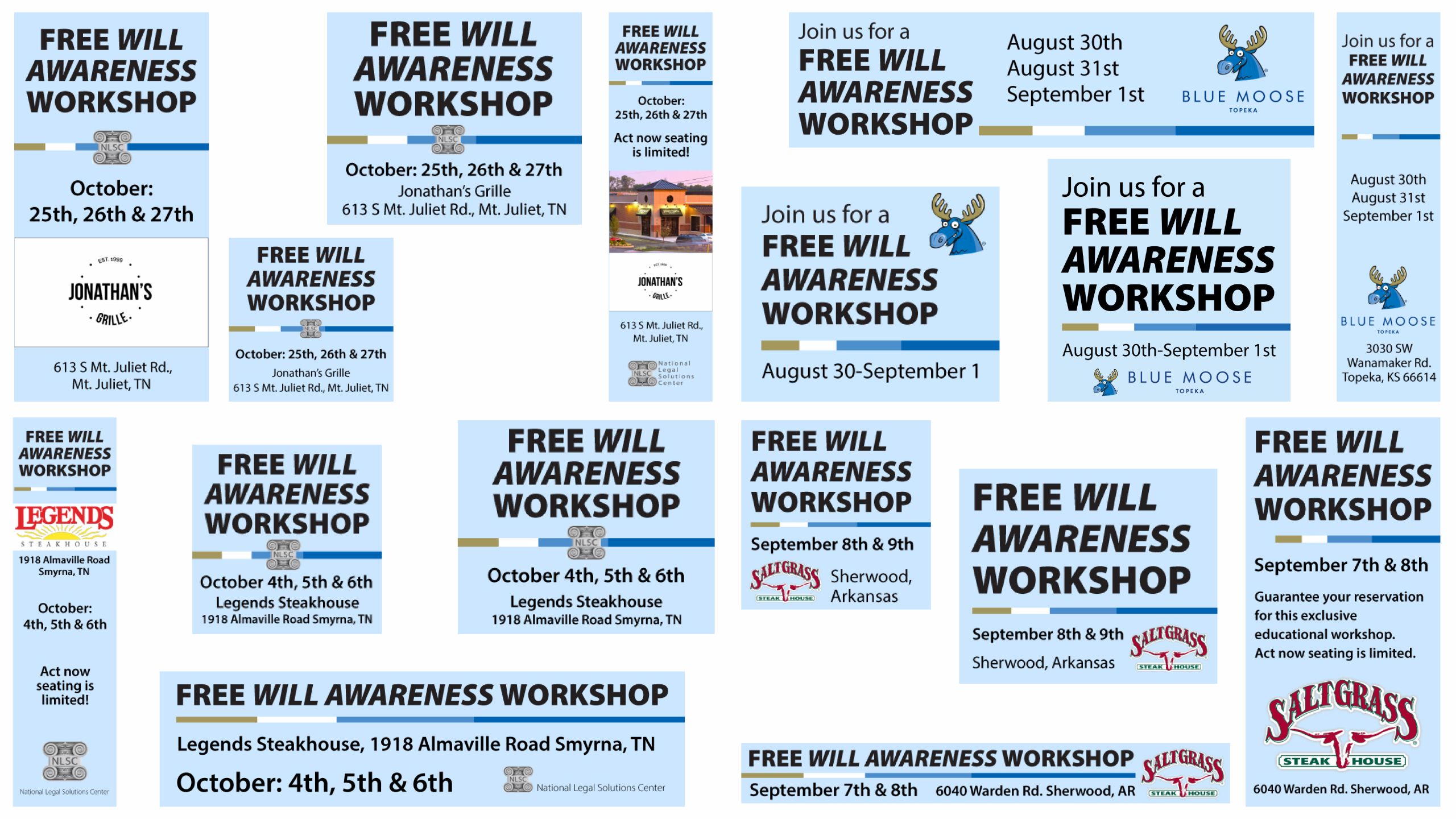
As part of the national Will Awareness campaign, I developed a targeted display advertising strategy designed to increase workshop registrations and reinforce direct mail and social media efforts. Display ads were created in Adobe Illustrator and deployed through AdRoll, targeting curated email lists to ensure precise audience reach.
The creative combined branding from National Legal Solutions Center with localized imagery from the cities where workshops were held. Since events took place at restaurants across the country, I incorporated restaurant branding and venue imagery to build familiarity and credibility. While visual alignment was important, the primary focus of each ad was clearly communicating what the workshops covered and the specific event dates.
For most markets, I implemented a second wave of display ads as the workshop dates approached. These featured more urgent messaging to drive immediate action and increase registrations. Markets that received this urgency-focused creative saw stronger engagement and higher form sign-ups, validating the effectiveness of layered messaging and timed promotional pushes.
This display strategy played a critical role in reinforcing awareness, building trust through localized visuals, and driving measurable increases in workshop registrations.
Facebook Ads and Forms
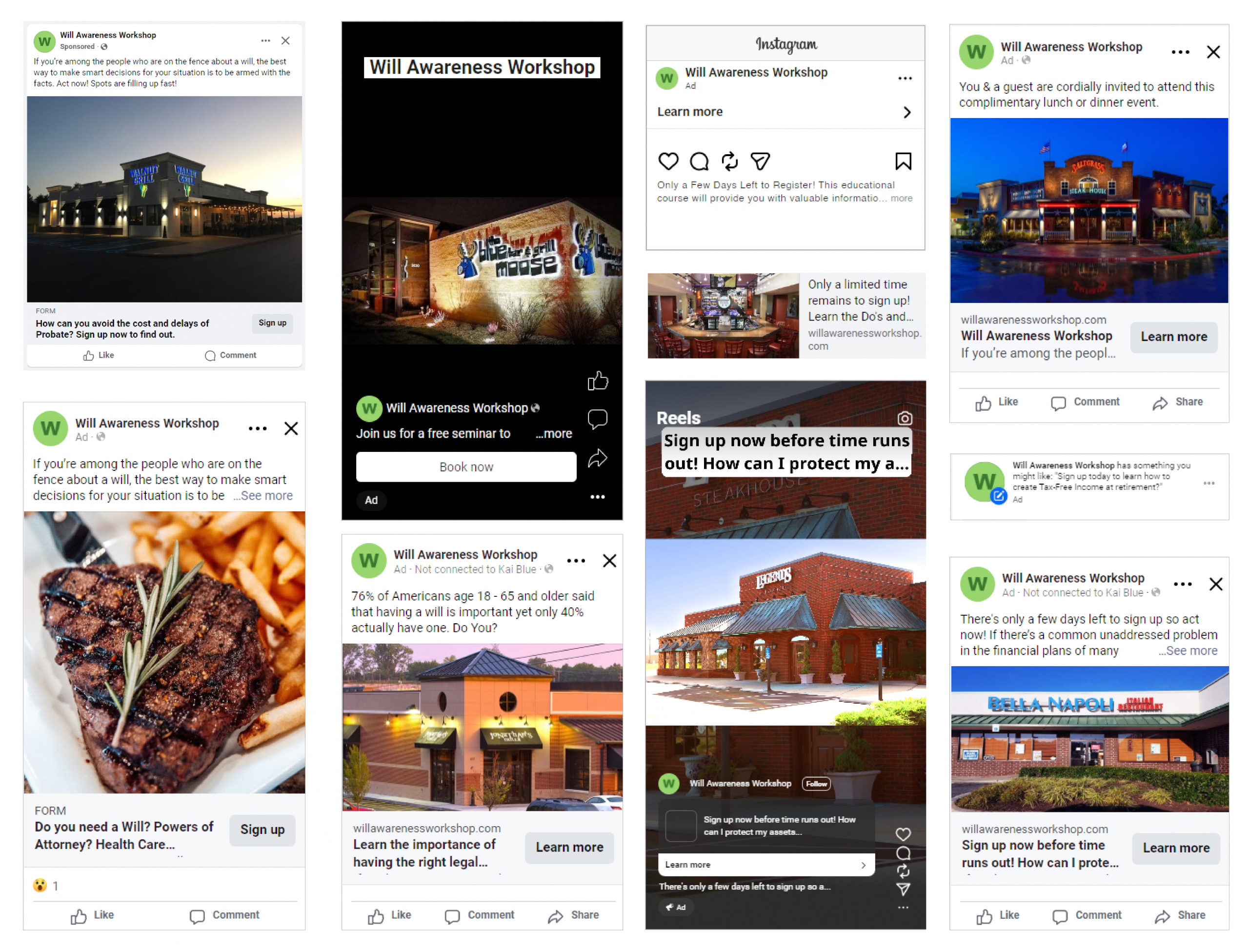
The Facebook component of the Will Awareness campaign was structured with dedicated campaigns for each individual workshop, allowing us to localize messaging and optimize performance by market.
We leveraged both customer list matching and Facebook-built audiences based on location, age, and relevant interests. Standard Facebook ads were used to drive traffic to the bespoke landing pages, while lead form ads were deployed to capture registrations directly within the platform. The form ads were primarily targeted to our pre-qualified email lists to maximize efficiency and conversion intent.
Through testing and performance analysis, we observed higher engagement rates from the broader, interest-based audiences built within Facebook. However, the strongest intent and most consistent sign-ups—both on the website and through Facebook lead forms—came from our targeted list-based audiences.
Creative assets were aligned with the display advertising and landing pages, using consistent branding, workshop details, and messaging to reinforce recognition across channels. This cohesive, data-driven Facebook strategy strengthened overall campaign performance and contributed significantly to workshop registrations nationwide.
Direct Mail Strategy for
Will Awareness Workshops
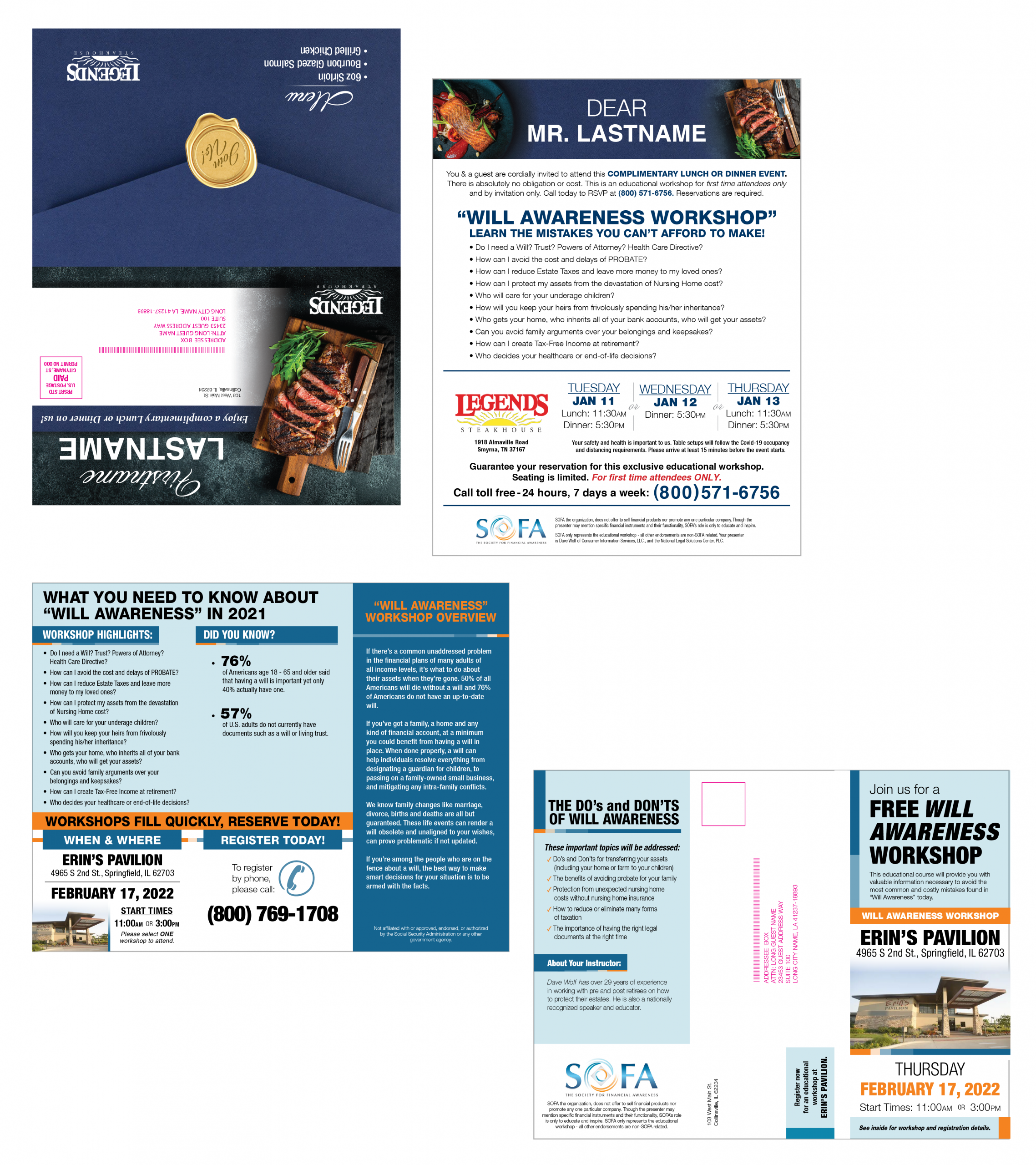
As part of the Will Awareness campaign, I developed a direct mail program designed to drive workshop attendance and reinforce our digital marketing efforts. The mailers were created using a combination of pre-existing brand assets and original creative developed specifically for the campaign. I incorporated imagery and visual elements originally produced for the website and digital ads to ensure consistency across all channels.
I designed a modular tri-fold flyer template that could be deployed across every market, allowing for efficient production while maintaining a localized feel. Dates, locations, and venue imagery were easily swapped out for each workshop, ensuring accuracy and relevance without requiring a full redesign for every city.
The messaging emphasized what attendees would learn, event details, and clear calls to action, aligning with the digital campaigns and appointment-setting process. Workshops supported by direct mail consistently saw significant increases in sign-ups, both through website registrations and inbound calls to the phone bank, demonstrating the effectiveness of integrating physical mail with digital outreach.
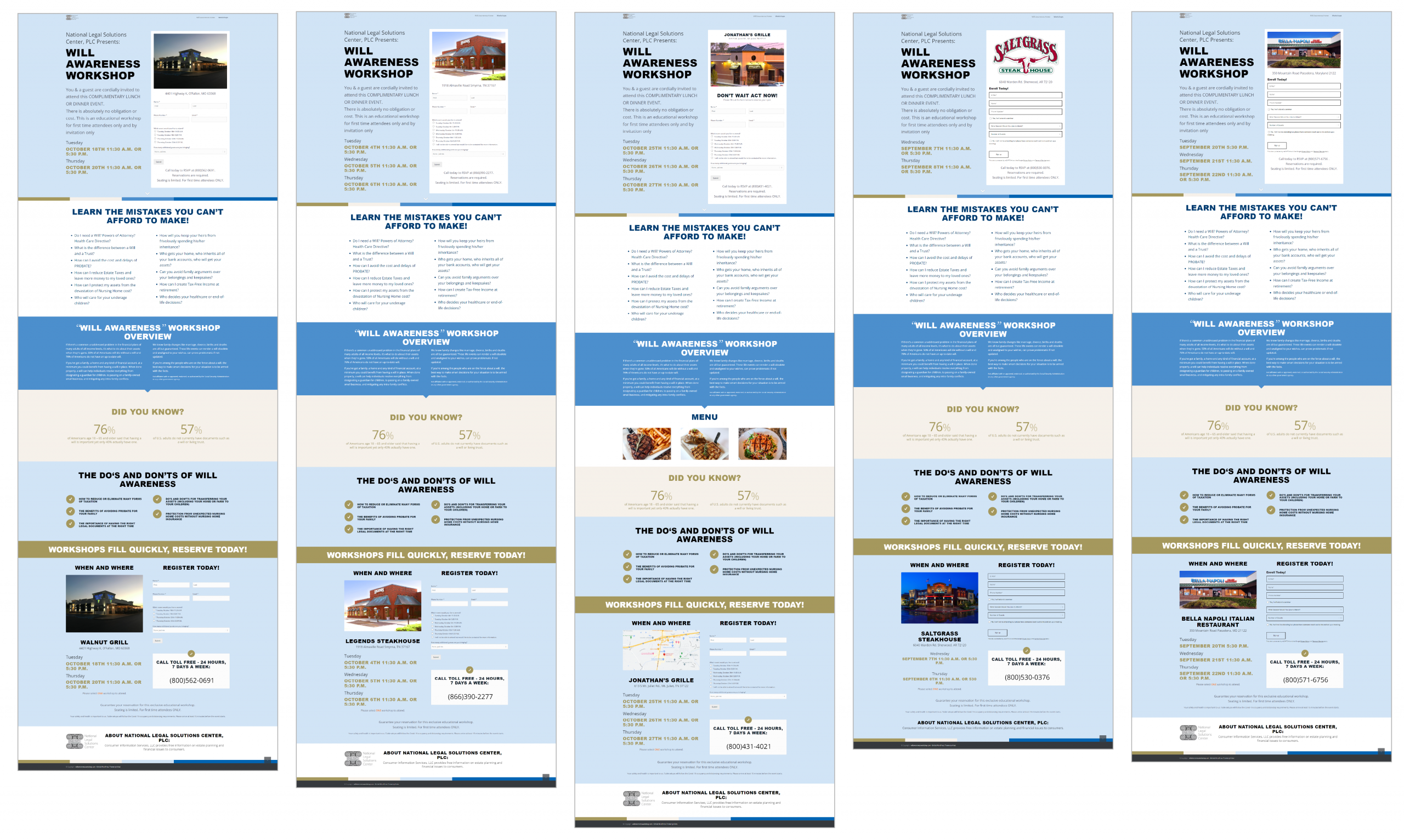
Will Awareness Workshop Landing Pages
For the Will Awareness campaign, I developed a foundational landing page template that served as the framework for every workshop location. From this base design, I created customized versions for each specific event, updating dates, venues, imagery, and localized details while maintaining a consistent brand presence.
Visual branding and imagery were intentionally aligned across landing pages, direct mail pieces, display ads, and social media ads to create a unified design language. Even though the pages were template-based, each felt cohesive and market-specific, reinforcing recognition and trust as prospects moved between channels.
The primary objective of each landing page was to clearly communicate the purpose of the workshop and persuade visitors to attend. Content highlighted both the benefits of the estate planning services and the added incentive of a complimentary meal, creating a compelling value proposition.
I also built the registration forms to include selectable dates and time slots for each workshop. This structure allowed the client’s appointment-setting team to follow up with precise scheduling information, improving confirmation rates and streamlining the transition from online registration to confirmed attendance.