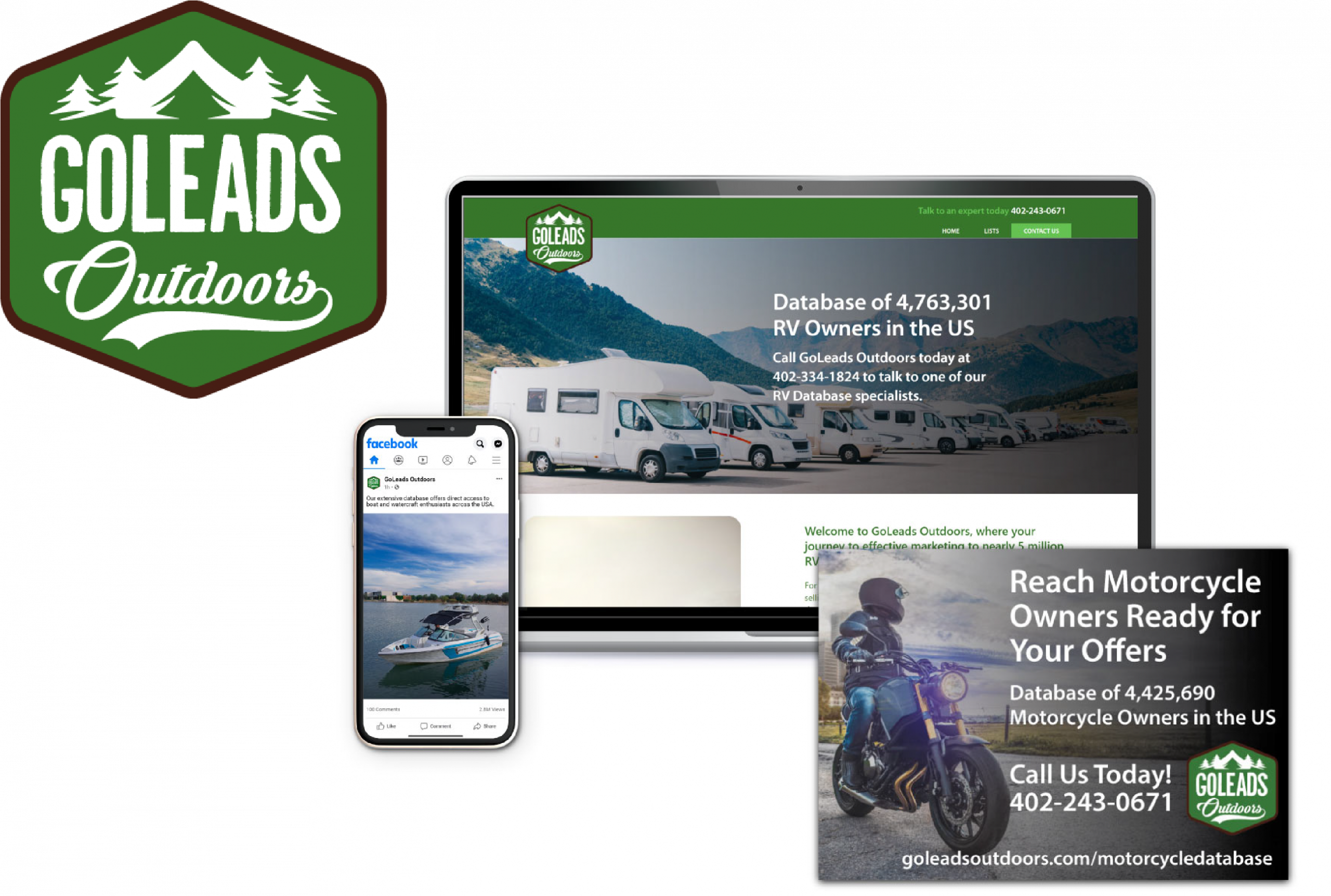
GoLeads Outdoors
I led the GoLeads Outdoors project, aimed at creating a targeted spin-off site from our larger database to capitalize on high-performing segments. Previous segmented campaigns and spin-off sites had shown success, so my task was to identify the next niche opportunity.
I began by analyzing internal form submissions to determine which lists generated the most inquiries. From this research, RV owners emerged as a highly engaged and specific audience. I then expanded the scope to include other outdoor recreation enthusiasts and began outlining the new site.
Although the site was originally planned to be developed by our internal team, time constraints led me to build it myself on WordPress using our in-house Enfold theme. I mocked up and prototyped the design in Adobe XD, iterated on the user experience, and then implemented the site once designs were finalized. Tracking codes were installed immediately, and I established a Facebook presence and ad accounts to prepare for multi-channel marketing.
For promotion, I compiled lists of businesses likely to be interested in our database and created campaigns across multiple platforms. Once the core campaigns were live, I launched an integrated, multi-layered campaign combining mailers, display ads, search ads, and social media ads. These efforts funneled high-intent traffic to the site and drove phone calls and form submissions.
Over the first year, the spin-off site generated increased database sales compared to when these segments were housed on the main site, validating the strategy and demonstrating that niche-focused spin-offs could be scaled across other audiences.
Website Design
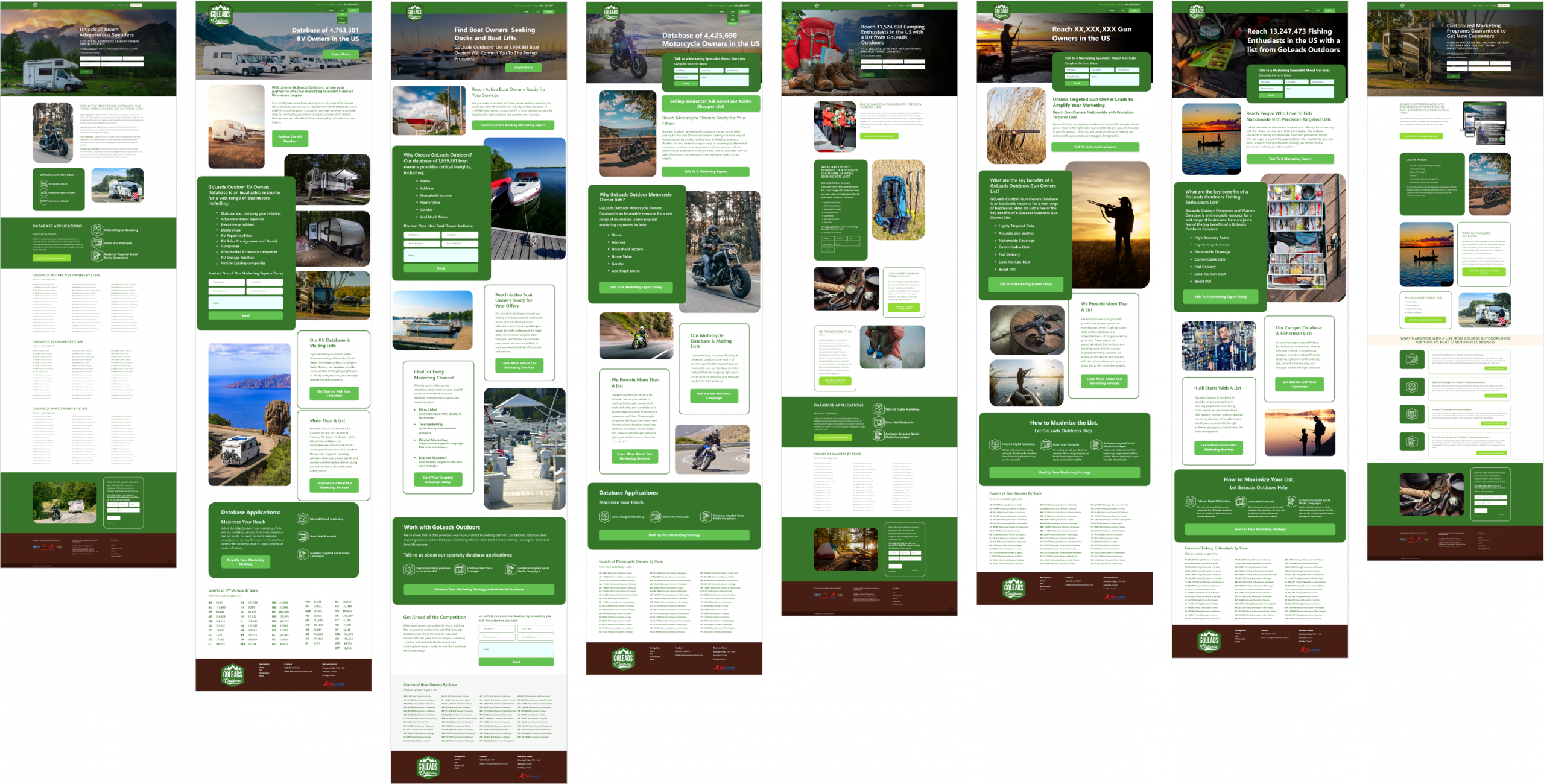
I designed and developed goleadsoutdoors.com from concept to launch, beginning with wireframes and high-fidelity prototypes in Adobe XD to map out user flow, layout, and overall visual direction. After finalizing the design, I built the site in WordPress using the Enfold theme, customizing layouts and functionality to match the approved prototype. The result was a responsive, user-friendly website that aligned with the brand’s identity while delivering a clean, intuitive experience across devices.
Digital Ad Assets
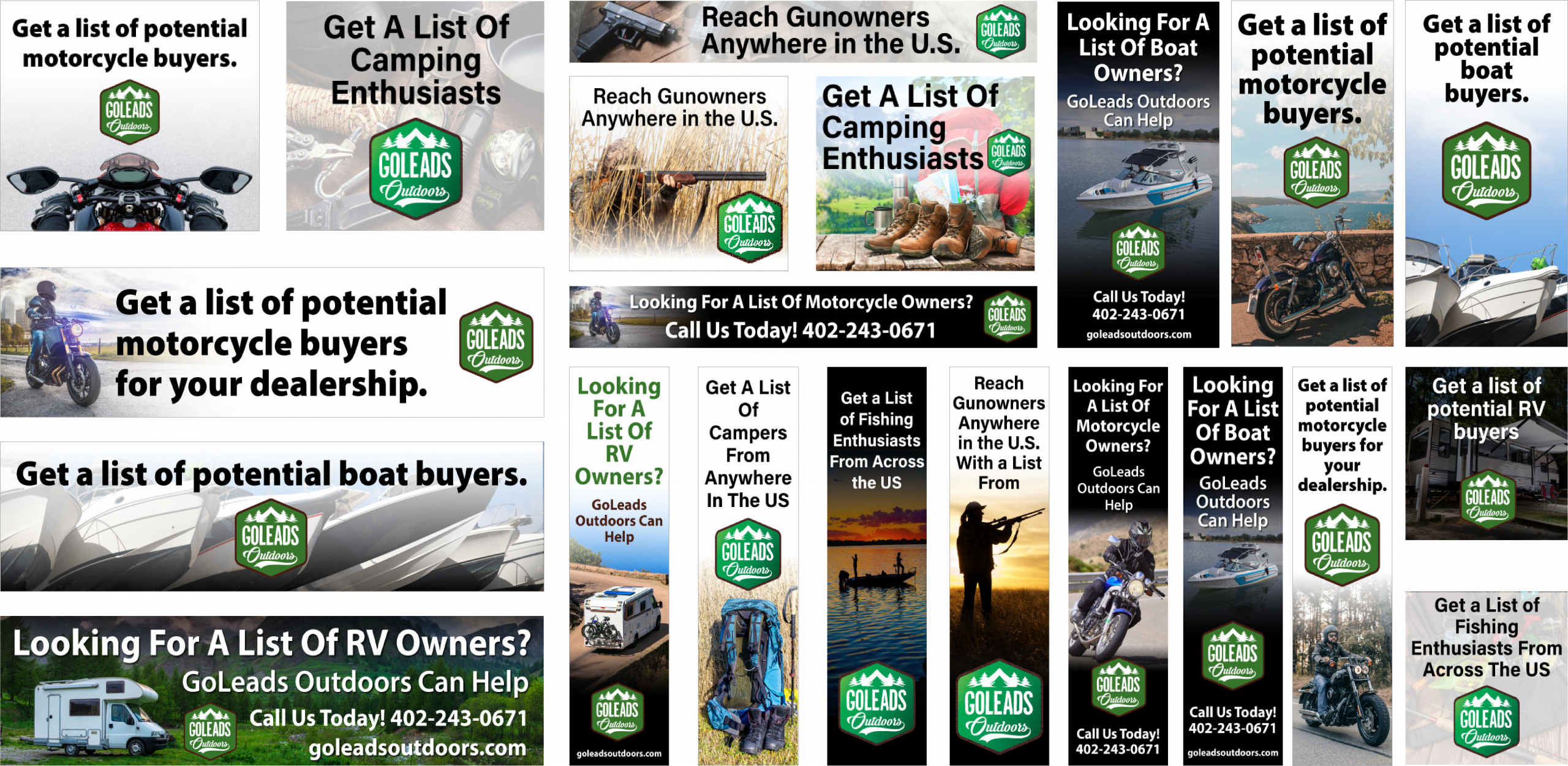
For Go Leads Outdoors, I created a full suite of ad assets across display, social, and search platforms to support multi-channel campaign performance. This included visually compelling display ads, scroll-stopping social media creatives, and optimized search ad variations designed to align with campaign objectives and audience intent. Each asset was developed to maintain brand consistency while adapting messaging and visuals to fit the strengths of each platform, ensuring cohesive storytelling and measurable results across channels.
FaceBook Page, Ads and Email Template
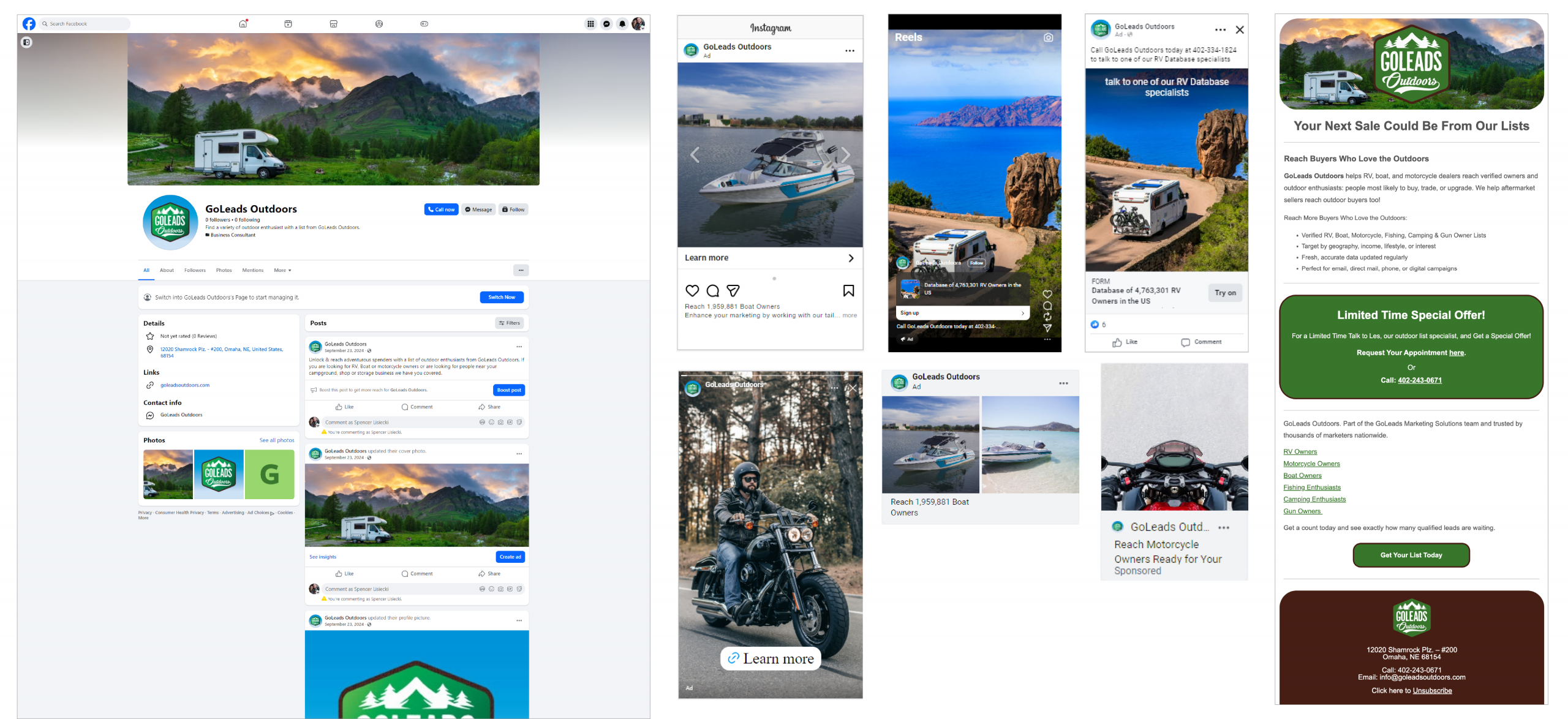
For GoLeads Outdoors, I developed a cohesive digital presence across Facebook and email marketing channels to drive engagement and lead generation.
I designed and optimized a visually appealing Facebook page that aligned with the brand’s identity, ensuring consistent messaging, strong visuals, and clear calls to action. Building on that foundation, I created and managed high-performing Facebook ad campaigns, including standard conversion ads and lead form ads, carefully crafting creative, copy, and audience targeting to maximize performance and generate qualified leads.
In addition to paid social efforts, I designed custom email templates and campaign-specific emails to nurture leads and support ongoing marketing initiatives. Each template was built for visual consistency, mobile responsiveness, and engagement, helping maintain brand continuity while driving measurable results across channels.
GoLeads Outdoors Marketing Projects
For GoLeads Outdoors, I developed and executed multiple targeted Facebook marketing campaigns built around the company’s segmented audience lists, including boat owners, RV owners, motorcycle owners, hunters, and fishermen. Each campaign was strategically tailored with messaging and creative designed to resonate with the specific lifestyle and interests of each group.
To maximize reach and performance, I leveraged a combination of custom list uploads, lookalike audiences, and interest-based targeting within Facebook. Campaign structures included both standard conversion ads that directed users to dedicated landing pages on the website and lead generation campaigns utilizing native Facebook lead forms to streamline user sign-ups.
I conducted extensive A/B testing across audiences, ad formats, headlines, imagery, and calls to action to identify top-performing combinations. Multiple creative variations were deployed simultaneously to measure engagement, click-through rates, and conversion performance. Insights from these tests were used to continuously optimize campaigns, improve cost efficiency, and increase the overall quality of leads generated.
Search Ads
To build high-performing paid search campaigns across Google Ads and Microsoft Advertising, I developed a keyword strategy grounded in customer research and performance data.
I began by conducting stakeholder interviews and customer surveys to understand how prospects described their problems, what language they used before discovering the brand, and what triggered purchase decisions. Instead of relying solely on keyword tools, I extracted recurring phrases and intent signals directly from survey responses and sales conversations. This allowed me to build tightly themed keyword groups aligned with real search behavior and high-intent queries.
After launch, I used conversion tracking and insights from Google Analytics along with search term reports inside both ad platforms to refine performance. By analyzing actual query data, engagement metrics, and conversion paths, I identified new high-performing search terms, eliminated wasted spend through negative keywords, and shifted budget toward the most profitable segments.
This combination of qualitative research and ongoing data analysis created a scalable PPC framework that improved relevance, increased conversion rates, and maximized return on ad spend.
Display
I planned and launched a series of highly targeted display ad campaigns using AdRoll and Google Display Ads, focusing on distinct audience segments such as boat owners, RV owners, motorcycle enthusiasts, hunters, anglers, and additional niche groups. Each campaign was supported by tailored creative and messaging designed to align with the specific interests and behaviors of the intended audience.
The targeting approach leveraged uploaded customer email lists to reach qualified prospects, with display ads strategically directing users to dedicated landing pages built for conversion.
I implemented structured A/B testing across visuals, headlines, copy variations, calls to action, and audience segments to identify top-performing combinations. By closely monitoring key metrics—including click-through rate, conversion rate, and cost per acquisition—I continuously refined campaign performance. This results-driven, data-focused strategy increased efficiency, improved lead quality, and optimized return on ad spend across display platforms.
Integrated Multi-Channel Marketing Campaigns
To build high-performing paid search campaigns across Google Ads and Microsoft Advertising, I developed a keyword strategy grounded in customer research and performance data.
I began by conducting stakeholder interviews and customer surveys to understand how prospects described their problems, what language they used before discovering the brand, and what triggered purchase decisions. Instead of relying solely on keyword tools, I extracted recurring phrases and intent signals directly from survey responses and sales conversations. This allowed me to build tightly themed keyword groups aligned with real search behavior and high-intent queries.
After launch, I used conversion tracking and insights from Google Analytics along with search term reports inside both ad platforms to refine performance. By analyzing actual query data, engagement metrics, and conversion paths, I identified new high-performing search terms, eliminated wasted spend through negative keywords, and shifted budget toward the most profitable segments.
This combination of qualitative research and ongoing data analysis created a scalable PPC framework that improved relevance, increased conversion rates, and maximized return on ad spend.